



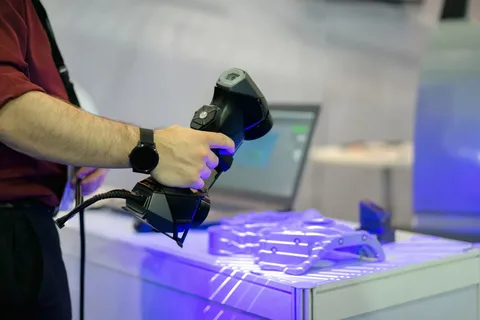
The world of architecture is rapidly evolving, with technology playing a pivotal role in how designers and architects approach their work. One of the most transformative innovations in recent years is 3d scanning. This powerful tool is revolutionizing the way architects design, visualize, and present their projects. By capturing precise and detailed data from the real world, 3D scanning is making it easier to create accurate models and gain a deeper understanding of physical spaces. In this article, we will explore how 3D scanning is enhancing design and visualization in architecture.
What is 3D Scanning?
3D scanning is the process of capturing the physical world through laser scanners or photogrammetry techniques, converting real-world objects or environments into digital 3D models. These models provide architects with accurate, measurable data that can be used to design, analyze, and visualize structures or spaces. Using tools like LiDAR (Light Detection and Ranging) scanners, architects can create highly detailed, accurate 3D representations of both interior and exterior spaces.
The technology has advanced in recent years, making it more accessible and user-friendly, which has led to its growing popularity in the field of architecture.
Key Benefits of 3D Scanning for Architects
1. Improved Accuracy and Precision
One of the primary benefits of 3D scanning for architects is the level of accuracy it provides. Traditional methods of gathering site data, such as manual measurements, can be time-consuming and prone to human error. With 3D scanning, architects can gather precise measurements down to millimeters, ensuring that their models are as accurate as possible. This is especially critical in renovation and restoration projects where precise measurements of existing structures are crucial.
2. Enhanced Visualization and Design
3D scanning not only captures real-world data but also enables architects to visualize their designs in more immersive and dynamic ways. With the help of 3D models, architects can create detailed visualizations and walkthroughs that give clients and stakeholders a better understanding of how the final design will look and function. These models can be used to test different design options, experiment with layouts, and visualize how light, shadow, and materials will interact within a space.
By utilizing advanced visualization tools, architects can present their ideas more effectively, leading to faster approval processes and fewer design revisions.
3. Streamlining the Design Process
With the detailed data provided by 3D scanning, architects can streamline the design process. Instead of starting from scratch or working with rough sketches and measurements, architects can begin their design work with highly accurate data. This allows for faster decision-making, as potential design issues or conflicts can be identified early on in the project. Additionally, 3D scanning can significantly reduce the need for rework, which helps save time and resources.
4. Seamless Integration with BIM (Building Information Modeling)
Another key advantage of 3D scanning for architects is its seamless integration with Building Information Modeling (BIM). BIM is a digital representation of a building’s physical and functional characteristics, and it relies heavily on accurate data to create an effective model. By incorporating data from 3D scans into BIM software, architects can create highly detailed and accurate models that serve as a foundation for the entire building lifecycle, from design to construction and beyond.
The integration of 3D scanning with BIM also allows for real-time updates and modifications to the model, making it easier to collaborate with other professionals involved in the project.
Applications of 3D Scanning in Architecture
1. Renovation and Restoration Projects
One of the most common applications of 3D scanning in architecture is in renovation and restoration projects. When working with historic buildings or existing structures, architects need highly accurate data to understand the building’s current condition and limitations. Traditional surveying methods may not capture all the intricate details of a structure, whereas 3D scanning can capture even the smallest features, such as decorative elements, windows, and door frames.
2. Site Analysis and Assessment
Before beginning the design process, architects often need to assess the site where the project will take place. 3D scanning allows architects to gather detailed information about the site’s topography, surrounding environment, and any potential obstacles that may impact the design. By accurately capturing the terrain and surrounding structures, architects can make more informed decisions about how to position their designs and ensure that the final project fits seamlessly into its environment.
3. Construction Monitoring
During the construction phase, 3D scanning can also be used for progress monitoring. Regular scans of the construction site can help ensure that the building is being constructed according to plan. By comparing the scanned data to the original design models, architects can quickly identify any discrepancies and make adjustments before they become costly problems.
Future Trends: The Evolution of 3D Scanning in Architecture
As technology continues to advance, the role of 3D scanning in architecture will only become more integral. The growing capabilities of 3D scanning devices, along with the development of artificial intelligence (AI) and machine learning algorithms, will likely enhance the accuracy and efficiency of scanning processes. Moreover, the rise of virtual and augmented reality (VR/AR) technologies will provide architects with even more powerful tools for visualizing and interacting with 3D models.
Conclusion
3D scanning for architects is transforming the way architectural projects are designed, visualized, and executed. From improved accuracy and precision to enhanced visualization and seamless integration with BIM, this technology is streamlining the design process and providing architects with the tools they need to create innovative, functional, and visually stunning buildings. As technology continues to evolve, we can expect 3D scanning to play an even greater role in shaping the future of architecture.
