



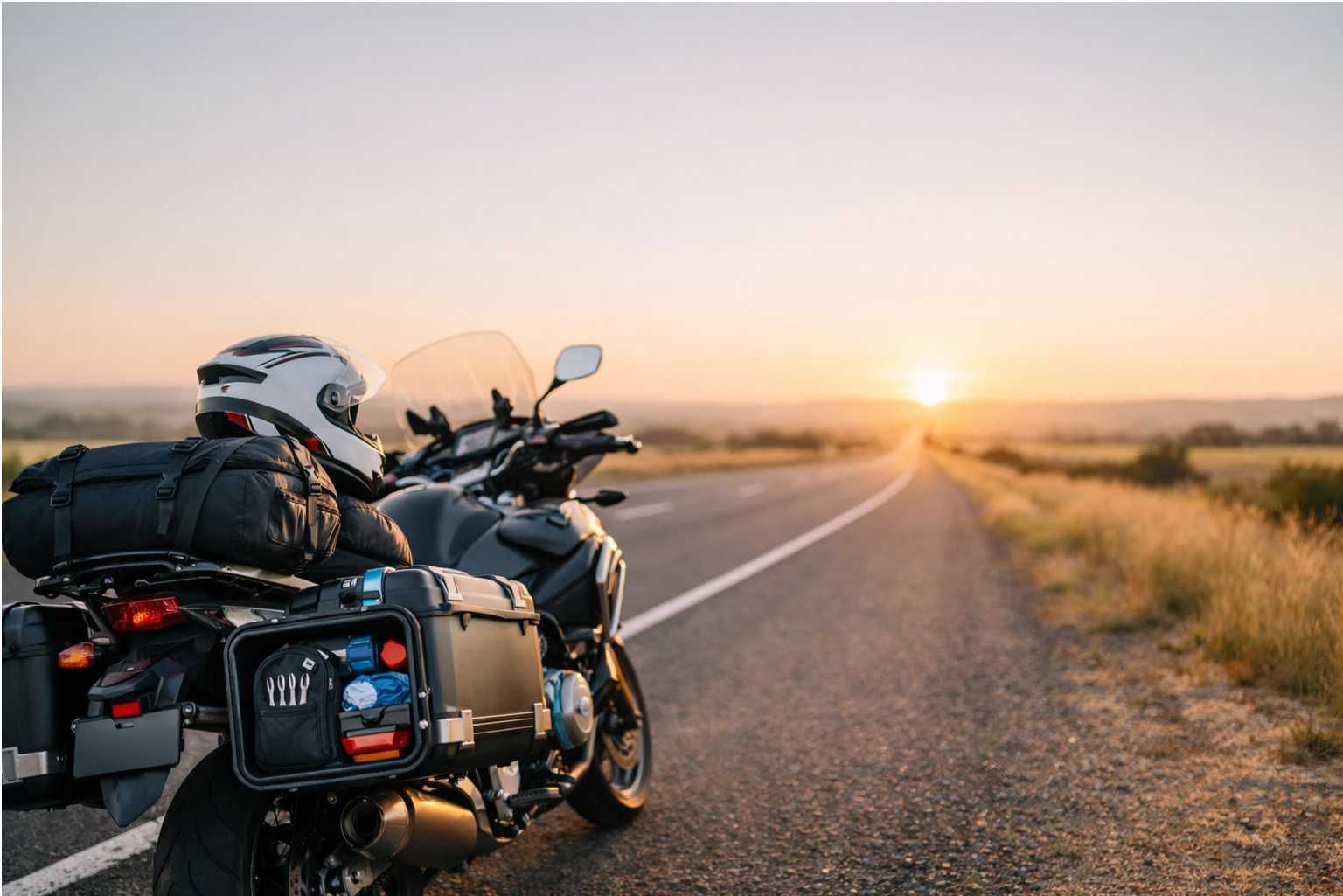
The highway ahead is long, and it offers freedom and adventure. And yet, before you turn that throttle and take your cross-country trip, your touring motorcycle should be in good shape. Having covered thousands of miles on diverse surfaces, I have learned that keeping a touring bike road-ready machine and choosing the right luggage setup for weekend trips is the key to turning the ride into a great experience instead of a nightmare down the road.
Knowing the Basics of Touring Bike Repairs
Your touring motorcycle is your home on wheels, as well as your transportation for long trips. Regular care is not a choice. It becomes a necessity when you are several hundred miles away from the nearest service station.
Check the Engine Oil
The engine oil is like the blood of your bike, and before every big trip, it should be checked. Fresh oil supports better performance, especially when your motorcycle is carrying extra weight from luggage and supplies.
Inspect Chain Tension and Lubrication
Chain tension and lubrication require special attention for touring riders. A well-maintained chain reduces wear on sprockets and transmission parts, and it can also help fuel efficiency.
On one of my unforgettable rides across the Southwest, I met another rider whose chain dropped and broke in the desert heat. He ended up paying a lot of money for towing and repairs.
Inspect Tire Condition and Pressure
Tires are a critical part of motorcycle touring preparation and should never be ignored.
Check the tread depth and watch for irregular wear patterns that could point to alignment issues. Tire pressure also has a major impact on handling, especially when luggage is added.
Always check pressure on cold tires before starting your riding day, and adjust it according to the manufacturer’s loaded touring recommendations.
Choosing Luggage Solutions for Weekend Trips
The luggage you choose changes the way your bike rides and how comfortable your trip feels from start to finish.
Hard vs Soft Luggage
Hard panniers offer more security and better weather protection than soft luggage, but they can also be expensive, heavy, and bulky.
I personally use a mix of hard cases for valuables like electronics, and a high-quality tail bag for clothing and softer items.
Pick the Right Storage Capacity
Capacity planning requires an honest look at what you truly need versus what you think you might need.
Luggage solutions for weekend trips usually do not require as much gear as multi-week adventures. A practical setup can include thirty-liter side cases and a fifteen-liter tail bag, which gives enough storage without hurting the bike’s handling.
Distribute Weight Correctly
Weight placement has a big effect on stability and comfort.
Heavy items should be packed low and forward to keep the center of gravity close to the bike’s natural balance point. Lighter items should go in top cases or tail bags.
I learned this during mountain passes in Colorado when an overloaded top case caused dangerous high-speed handling.
Pre-Trip Inspection Checklist for Long-Distance Riding
Before heading out, a full inspection helps prevent breakdowns and improves safety on the road.
Check Your Brake System
Start with brake fluid level, then inspect pad thickness.
Touring motorcycles can wear brakes quickly, especially in mountain areas where riders must control speed while riding downhill for long stretches. A spongy brake feel may suggest air in the lines or old brake fluid that needs urgent attention.
Test Electrical Systems
Electrical reliability is essential for touring. Navigation and heated gear are common examples of gear that must work without fail.
Check all lighting systems, including turn signals and brake lights. Test any auxiliary power ports, since modern touring often relies on GPS units and communication devices that need consistent charging.
Inspect Coolant and Cooling Components
Coolant level and condition matter more than many riders realize.
Touring bikes generate steady heat during highway riding, and cooling system failure in remote areas can become a serious issue. Check hoses for cracks, soft spots, or signs of aging that could lead to failure.
Pack Your Gear in the Most Efficient Way
Packing the right way makes limited luggage space feel surprisingly roomy and keeps you organized during the trip.
Use Smart Packing Techniques
Roll clothes instead of folding them to save space and reduce wrinkles. Compression bags can also help, but avoid over-compressing items that can be damaged easily.
Carry a Practical Tool Kit
Your tool kit should match your skill level and your motorcycle’s needs.
Include a tire repair kit, basic wrenches that fit your bike’s fasteners, and duct tape for quick fixes on the road. A compact first aid kit takes almost no space but can be extremely helpful.
Keep Rain Gear Easy to Reach
Unexpected weather happens, so rain gear should be accessible.
Store waterproof jackets and pants where you can grab them quickly instead of burying them under other items. There is nothing worse than digging through a packed pannier during a sudden downpour.
Staying Road Ready During Your Travels
Long trips are easier when you build small daily habits that prevent minor issues from becoming major problems.
Do a Quick Daily Walk-Around
A short daily inspection becomes normal for experienced touring riders.
Each morning, take a quick walk around your motorcycle to check for fluid leaks, low tire pressure, or loose fasteners that may have shaken loose during highway riding. This five-minute habit helps prevent small issues from turning into serious problems.
Keep the Motorcycle Clean
Cleaning your bike on a long ride does more than improve appearance.
Regular washing can reveal developing issues like oil seepage, cracks, or damaged parts that dirt might hide. A clean motorcycle also improves the touring experience and makes the trip feel more enjoyable overall.
Conclusion
To prepare your touring motorcycle for a cross-country adventure, you need to focus on basic mechanical care and make smart luggage decisions. Keeping your bike in strong condition through regular maintenance helps prevent breakdowns in remote locations, while a balanced luggage setup keeps your ride stable and comfortable.
When you plan properly, your motorcycle becomes more than just transportation. It becomes a reliable travel partner that helps you enjoy every mile of the journey.
FAQs
What maintenance tasks should touring riders complete before a long trip?
The key focus should be on oil changes, tire condition, brake system inspection, and chain maintenance. These parts directly affect safety and reliability during long-distance riding.
How much luggage is ideal for a weekend touring trip?
Around 45 to 50 liters of total luggage is a good target for most weekend tours. This is usually divided between side cases and a tail bag to maintain proper weight balance and easy access.
